Sunday 2 August 2026 The Ninth Sunday after Trinity
OT: Genesis 32.22-31
Psalm 17.1-7, 16 response “Deliver me, O Lord, by your hand.”
NT: Romans 9.1-5
Gospel: Matthew 14.13-21
The goal of this sermon is to do two things To sort of put this story in context, and then, with that context, use that to illuminate the story
The distance the crowds had walked to follow Jesus varied because they had come from various towns — towns is used in the plural. Jesus had spent the day healing people, and it was getting towards evening, so the crowds would probably have walked between 3 and 15 miles. They would have had a long day. 5,000 people is about the capacity of the Royal Albert Hall, by the way. He must have been working quite quickly, as it would take a modern-day minor injuries unit 50–100 days, working 24/7, to see 5,000 people. So probably some had come sick or lame, and some had come to see him. Healthcare was random and inconsistent, to say the least, so if you’re ill and this chap works, it’s all worth it.
However, waiting in that crowd would have been an exhausting, chaotic, and emotionally intense test of endurance that took all day. Lots of pushing and shoving, no food, hot and dusty, and you’re sick, you’re in pain, and you don’t feel well.
One good thing: you’re not thirsty, because the Sea of Galilee is freshwater, fed by springs and the Jordan River, so safe to drink. So after a long day, sick in a bustling crowd, in the heat, food was the issue.
No wonder Jesus had compassion for this ragtag bunch of wounded souls. I use the word souls deliberately, but even working 24/7, it would still take 3–4 days to see everyone.
So that leaves us, thousands of years later, figuring out what the heck Jesus is doing.
Why has he left us this story? Nothing in the bible is their by accisent
and knowing that
What do we do with this story?
Here, I think the practicalities of this story, while essential to understanding it, almost mask its point. I mean, as the disciples tore off never-ending chunks of bread, what did they see? Here is actually possibly less important than why it happened, and what we learn from the why.
So the rest of our sermon is on that: why, and what can we learn from this?
The why becomes clearer when we break that down a bit into lessons
The first lesson is that we can see Jesus did not resent being interrupted. He had been seeking a solitary place, yet his day was completely diverted by the needs of the crowd. Instead of turning them away, he was moved with compassion. The lesson here is that life rarely presents opportunities for compassion at convenient times. So it wont for us either
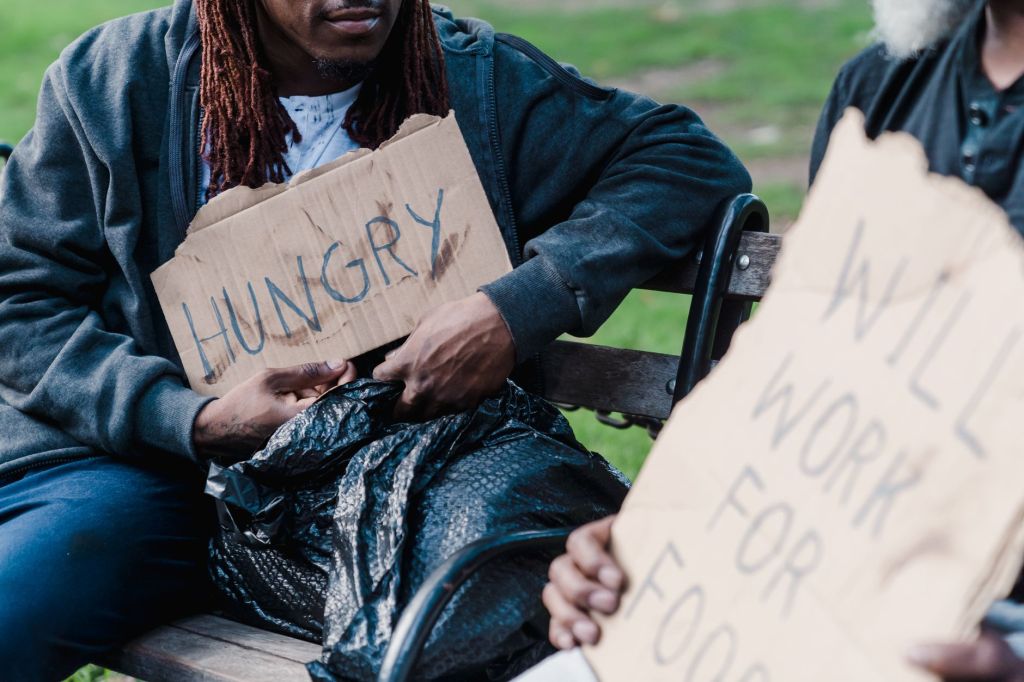
The second lesson: is it that Jesus looked after physical wellbeing before he thought about their other needs? I have learnt You can’t do one without the other. People when they are hungry, that is literally all they feel
The third lesson of mission here is that, when it comes to mission with us flesh-and-blood creatures, you can’t divorce one from the other, and doing one well opens the door to the other.
The fouth lesson is its down to us
and its one that really resonates for me is when the disciples saw suffering and wanted to send this chaotic, injured mass of people away, Jesus doesn’t go, “Yep, can’t help today.”
Instead, he says:
What are you going to do about it? Feed them. Then he makes the impossible happen.
So the fourth lesson is that the “doing” of miracles is on us? He could have made the bread multiply and then had people queue up. But here, we get involved with his miracle, as we have to in our lives today.
The fifth lesson here: is it that Jesus overcomes the impossible through us? So when we see suffering, Jesus asks us: what are you going to do about it? Then he enables us to do miraculous things
The sixth lesson is this: when someone needs help, and we have plans, Jesus asks us, are you going to stop what you’re doing?
Or is it that Jesus here is showing the true nature of compassion: it’s interactive, it’s when needed, and it prioritises physical need without ignoring other needs.
However, I think all this story can be summed up in one word: mission. This is mission; this is evangelism in its purest form. I have always been called to do mission and evangelism, in various ways: in Costa, literally trying to answer people’s questions; then in street kitchens; and in the pastors.
We run a course called Being With, where people ask themselves questions about the other side of life, beyond the utilitarian.
It’s asking people to explore the other side of life.
This is the side that atheism, to my mind, ignores. Its immeasurable and yet we all know its real. And like poetry and art , it takes that side from the abstract to the real
I have a logical faith, one I am happy to defend. Actually, however, the more I think about it, while being able to debate and defend your faith is essential, and being proud and certain about his promises is essential, that’s only one way to explain him. Not even the best way.
. Jesus is like art and poetry; he draws you into the experience of him. When you encounter him, you live it, like poetry. We should try to be Jesus’ music and, instead of bringing people to some sort of belief through learning and logic bring people into a space where they can experience him.
What’s better: saying God loves you, or letting you find out God loves you through healing, through being fed, through experiencing the boundless nature of it by making only five loaves of bread and two fish feed 5,000? And seeing him make people whole What do you do with your practical God, in a logical box, after that?
Once that penny drops, you stop and you go, “OK, Jesus, show me where I’m needed and how I can spread your love.”
That’s where all of us should land if we take this story as true. As C.S. Lewis said, “Christianity is a statement which, if false, is of no importance, and if true, of infinite importance. The one thing it cannot be is moderately important.”
By behaving as a Christian, by bringing people into the experience of God’s love, it shows that we believe it. But it also brings people into the knowledge of God’s love, not as an abstract debate, but like music and poetry, by drawing us into the experience of it.
That is the Great Commission, and how we do it. And today, I think the lesson of this story was for us, his disciples: follow me, and this is what will happen.
So this is what the story today does. By asking ourselves where we fit in, we more clearly see the example set by him: us doing the impossible, not just him; us disciples doing it. The way to show his love is to let people experience it. Just stop when someone needs you, because as soon as you let that moment consume you, and give it to God,
you’re going to be what he needs you to be: the person looking after the needs they have, both physical and spiritual.
One thing is for sure: you will do what his love wants you to do.
At the very least, you will be the best version of yourself. But if it’s in his plan, you’re going to do the impossible.
With so many lessons in this story, we are left with one last question:
Where are you in this story?


Leave a comment